Planting Perennials

As mentioned previously, I recently planted some new (to me) varities of perennials in my garden.  Salvia nemerosa or Meadow Sage is a low growing plant with blue spires.  It’s perfect for borders and seems to hold its blooms for a longer time than some.  The average height of the plant is 8-10″ tall and can spread to 18″ wide.  Salvia prefers well-drained soil and I used peat moss to amend the existing garden soil.  Peat moss is a natural organic soil amendment that, when mixed with your regular garden soil, seems to create a happy environment for the plants.  Full sun is ideal but the plant will tolerate some shade.

The second perennial on my list of easy care plants is the Angelonia. My nursery stocked 3 different colors, violet, white and pink.  The plant has small clusters of  flowers on spikes.  The leaves on the plant are delicate and the prettiest color of emerald green.  I have had experience with this perennial during my landscape days.  Once the plant begins to look leggy and disorderly you only have to cut it back and it will send new growth.  I would leave at least 6-8″ of height when you cut it back.  It will reward you with new growth and begin to bloom again.  It is a solid performer in the garden and rests in the winter months, which works for me since I’m in the garden less during those months.  The average height is 12″ and will prosper if planted with some composted planting mix to enrich the soil.

To be continued…

Continued gardening-Perennials

As I mentioned previously, I recently planted some new, and some not so new, perennial discoveries (for me) in my yard.  The Salvia nemerosa or Meadow Sage is a low growing plant with blue spires.  It’s perfect for borders and seems to hold its blooms for a longer time than some.  The average height of the plant if 8-10″ tall and can spread to 18″ wide.   Salvia prefers well-drained soil and I planted mine with the addition of peat moss.  Peat moss is a natural organic soil amendment that, when mixed with regular garden soil, seems to create a happy environment for the plants.  Full sun is ideal but this plant will tolerate some shade.

The second perennial on my list of ‘easy care perennials’ is the Angelonia.  My nursery stocks at least 3 different colors (violet, white and pink), and the plant has delicate flowers on stems that show off small, emerald green leaves.  I have had some experience with this plant in the past and found that once it’s looking a little leggy and disorderly you only have to cut it back and it will send out new growth and begin to bloom again.  It is a solid performer in the garden and usually rests in the winter months, which works for me since I’m in the garden less during those months.  The average height is 12″ and it will prosper if planted with some planting mix to enrich the existing soil.

To be continued…

Gardening in Southern California

Along the coast of  Southern California June is a great month for planting in the garden.  To be honest, there aren’t too many months in Southern California that aren’t good.  After returning to the corporate world from my12 year stint as a landscape consultant (just so you don’t get the wrong idea, I planted alongside our workers each time we had a job to install), I have had to rethink my own garden.  I don’t have as much discretionary time to work in the yard as I once did.  I have found that “divide and conquer” works well for me.  Personally, I find it overwhelming to look at the yard as a whole and hope to make it the ‘picture in my minds eye’ knowing how little time I have to devote to it.  Dividing the space manages to help me feel it is possible to achieve my goals for the garden over time.  Dwell in the realm of possibility, right?

One way I have created less work for myself is to seek out perennials that bloom and then remain a ‘green contribution’ to the garden after blooming, only to produce their beauty once again the following year.  Four of my new-found favorites are 1) Salvia nemerosa (Meadow Sage), 2) Angelonia, 3) Scabiosa ‘Butterfly Blue’, and 4) Primula Asiatic Salvana.  More on the details (size and where to plant) including pictures in my next post.

Spring Dinner Party

My husband and I enjoy the company of a group of friends that celebrate the birthdays of each participant.  We’ve actually devised a way to do this so that it averages that one couple hosts a dinner each year.  We pull names from a hat at our annual ‘Caroling in December’ to determine who will host each birthday.  There are 5 couples and we pair birthdays that occur in the same month.  This year I selected the name of one of the most talented ladies in our circle.  This amazing woman entertains using original ideas and themes that impress all of us.  I had my work cut out for me, a self-imposed pressure.

The runner has violets similar to the china pattern and I was able to find pressed violets at Paper Source for the place cards.

Fortunately, I had just inherited my grandmother’s china, a pattern that set the theme for me.  Since my friend’s birthday is in the month of May the dishes, having a violet pattern, were ideal for the month.

I had such fun selecting paper to create invitations and name cards from Paper Source.  If you haven’t heard of this store you might enjoy visiting their website.  The website provides great ideas and inspiration for creating your own invitations and stationery.  I purchased some pressed violets that I used for the invitations, keeping with my violet theme, along with card stock in the green that is on the china.

I found a fabric that had violets, a dear friend volunteered to make the runner {thank you, Gretchen}.  Then for a center piece I used the white planter you see in the pictures.  Planting with maidenhair fern, African violets and violas completed the look.

Everything came together and the dinner was fun and delicious.  As the hostess I was responsible for the main course and others in our group brought the appetizer, salad and dessert.  This is a great way to entertain and it certainly makes the process a lot easier.

Fall Entertaining & Decorations

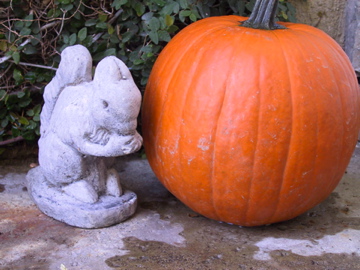
Fall 1I love entertaining in my home. There is something very cozy and comfortable about having good friends and family in to celebrate the season. I find the process of planning at least part of the fun. The first step I make in preparing for a dinner party is selecting a theme i.e. Fall Feast, Backyard BBQ, or Christmas Dinner. This theme will serve as a guide for selecting menu items and table settings.
Fall 4
The second step in my planning is to peruse my cookbooks and recipe files for a suitable meal. I try to keep in mind my schedule the week leading up to the event since I usually have to plan on making time for cleaning, shopping for food and flowers and cooking. Since I work full time, it is important for me to be realistic with the menu. I make sure the menu is not too ambitious. Your friends and family will love most anything you prepare due in part to the fact that they didn’t have to prepare the meal themselves! If my schedule is crazy I will sometimes buy some part of the meal rather than prepare every single item on the bill of fare. I find appetizers and desserts especially easy to find ready-made. These items will help you focus on a more complex main course and nothing will be lost for some help from the market or bakery. The last thing I want to be is overly stressed because I attempted to cram too much into a short amount of preparation time. Don’t be afraid to attempt a new, never prepared before, recipe. Sometimes I find the only time I will attempt certain ‘new’ recipes is when we are having people over for dinner. I’ve had very few utter failures. This process should be fun, enjoy the adventure!

Fall 2

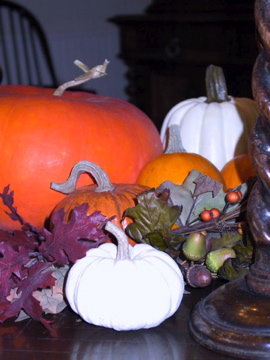
Once the menu is set, I enjoy thinking about which dishes, table linens, and the overall color scheme and decorative items to be used as the centerpiece of my table. Let your imagination run wild. There are no real rules for the centerpiece other than keeping the items or arrangements low enough on the table so as not to inhibit conversation or eye contact. Nothing is worse than not being able to see your neighbor across the table. I’ve used miniture antique Toby jugs in a fall arrangement of leaves, acorns, pumpkins and pomegranates with great effect. At Thanksgiving I enjoy using some minutre turkey figurines I found at an antique store along with fall foilage and flowers—and keeping with the Thanksgivng theme, I place a chocolate foil-wrapped turkey from a candy store at each dinner guests place. The more surprising the table setting, the more your guests will delight in the attention and effort you have put into entertaining them.
Fall 3

Final Chapter in Caring for Roses-Summer

I apologize for my absense. We hosted our son’s wedding reception and that kept me very busy this past 3 weeks. I’m back and ready to provide those interested in my final bit of information on caring for roses during the heat of summer.
Caring for Roses, final chapter
I have had a problem with a tiny insect called Lace Wing. This tiny flying insect lands on the rose leaves and leaves its eggs on the underside of the leaf, the larvae hatch and begin eating immediately. They leave little pin holes on the leaves. I find that a strong spray with the garden hose does almost as much good as any of the arrays of poisons that are marketed for this problem. I try to avoid poison in the garden for all of the most obvious reasons, but especially because we have wonderful little finch that like to fly to each bush in groups of 6 or so and eat the insects—I don’t want to poison their dinner.

As I mentioned in previous postings, roses don’t have to be high maintenance. Sometimes I marvel at their ability to survive neglect. Enjoy these final days of summer and I’ll be back with some information about the apartment I’m in the process of furnishing.